Written by the Pro-Enviro Team
Offering motor vehicle spill cleanup for fleets throughout the Pacific Northwest
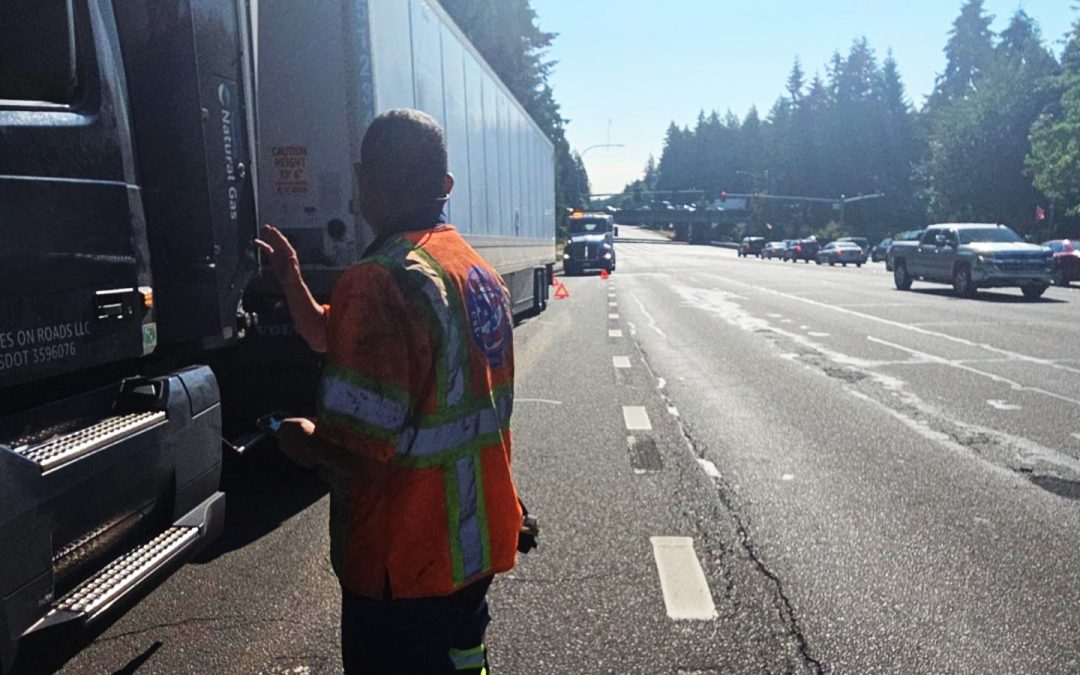
We got a call from a driver of a tractor-trailer saying his engine shut down and he was stranded in Martin Way and College Street in Lacy, Washington. The driver noticed coolant fluid under the hood and on the ground.
We sent a tow truck, but the coolant leak had to be addressed before the truck could be transported. In this article, we’ll share the real-life example of a breakdown that causes a vehicle fluid spill, and some fleet maintenance tips to help prevent something like this happening to your truck.
A Disabled Tractor-Trailer = Roadway Hazard
We got the call, were told about the coolant leak, and came equipped to clean it up. The operator arrived; the Washington State Department of Transportation had moved the truck onto nearby Sleater Kinney Road, where it was still disrupting traffic.
The truck was still drivable, so the operator escorted the driver to a nearby parking lot at a hotel under construction. Moving the truck to a safer location provided more room to address the situation while helping clear the roadway.
The trailer was recovered separately, while the tractor remained with the Pro-Enviro/Pro-Tow operator. We had to address that coolant leak.
Changing the Truck’s Diaper
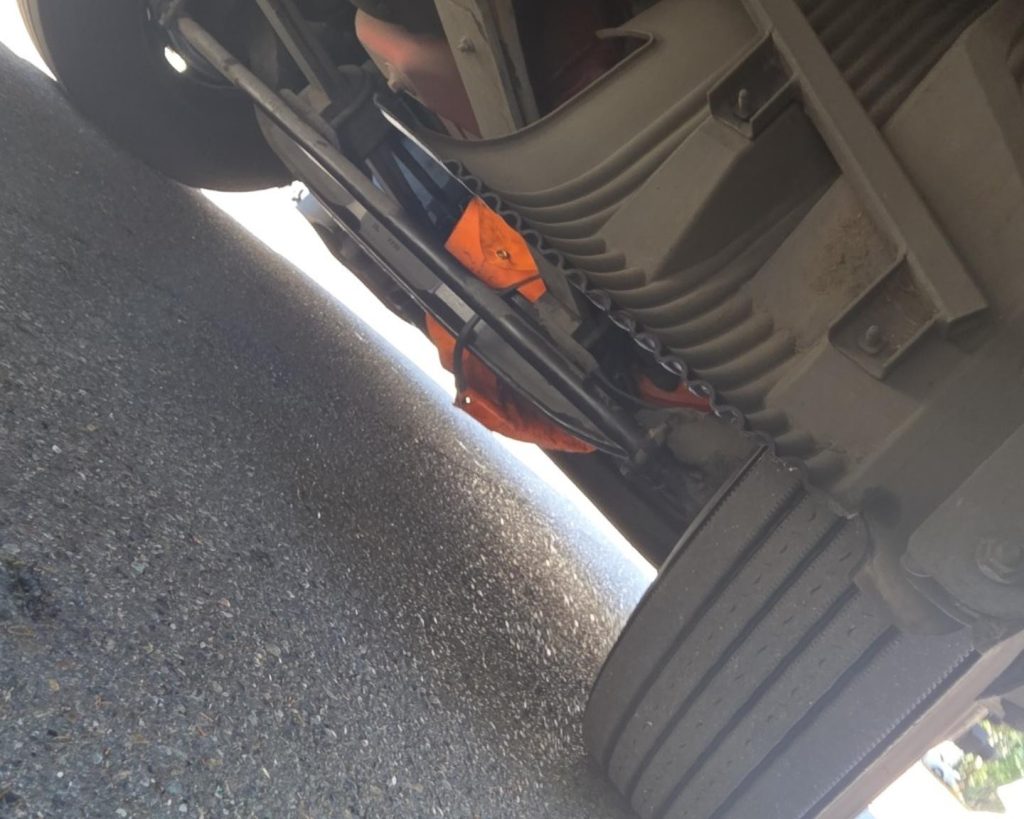
We didn’t want coolant leaking down the road while the truck was being towed, so we had to address the situation. The operator cleaned the affected area as thoroughly as possible and attached a containment "diaper" to the tractor for travel. The purpose was to help capture additional coolant that could leak while the vehicle was being towed.
The other areas where coolant had leaked were also cleaned up. Thankfully, it wasn’t a major leak, and it could be done quickly with the supplies and equipment we brought.
Once the tractor was prepared for transport, with its diaper on, it was towed to its destination.
What Causes Coolant Spills?
Coolant leaks from commercial vehicles can have several mechanical causes. A damaged or deteriorated hose can allow coolant to escape. Problems with the radiator, water pump, expansion tank, or other cooling-system components can also result in a leak.
Wear and age can contribute to cooling-system problems. If you operate older vehicles that travel long distances, this is definitely something to keep an eye out for. A semi-truck coolant leak can cause engine overheating, leading to cracked engine blocks, warped cylinder heads and total engine failure.
What Are Signs of a Coolant Leak?
 Subtle coolant leaks may go undetected at first, but there are typical signs when you’re losing coolant. Here are a few:
-
- High Temperature Gauge: The dash gauge climbs into the red zone.
- Low Coolant Warning: A dash light or alarm turns on.
- Sweet Smell: A syrupy, sweet odor comes from under the hood or through the vents.
- Puddles on the Ground: Bright green, pink, or orange liquid pools under the truck.
- White Smoke: Thick white smoke billows from the exhaust pipe. This means coolant is burning inside the cylinders.
If you notice any of these signs, stop the vehicle and call for help. The FleetEasy Company of Family is there for you 24/7, offering fleet towing, onsite repairs and effective spill response.
Preventative Maintenance Can Help Catch Leaks Early
Spill response begins after something has gone wrong. Sometimes it is an accident, and those happen. Often, it is due to a mechanical failure like this one. Preventative maintenance can help fleets identify developing problems before they result in a roadside incident like this one.
Regular inspections can help fleet maintenance teams identify visible leaks, deteriorating components, and other cooling-system issues. Catching a small coolant leak while a truck is in the shop is preferable to discovering it after a vehicle has become disabled and needing more extensive repairs.
That's where the FleetEasy family of companies can provide a more complete solution. Motorplex by FleetEasy handles fleet maintenance and repair, helping customers address mechanical issues before they become much more expensive problems.
Have a Spill Response Plan
Coolant may not attract the same attention as a large diesel or oil spill, but it still shouldn't be left on a roadway. Contain spills quickly when they happen, because faster action can help reduce impacts to people and the environment. Plus, when the spill is contained, it limits the expense and headache of the cleanup.
For fleet operators, having a plan for fluid spills is particularly important. Spills happen. A mechanical failure or accident can happen anywhere. Having a spill response plan, including equipping your drivers with truck spill kits, can make a stressful situation easier and less expensive to manage.
If you need help putting together a spill response plan, we can help. Pro-Enviro by FleetEasy offers compliant motor vehicle spill recovery, and this is what we do every day. We’ll ensure you’re educated, equipped and ready